


How-to guide
Deck cleaning
Clean a timber or composite deck yourself with a deck cleaner, a brush and a hose. What matters most is low pressure: too much can damage the timber.
The short answer
Pick a mild, dry day. Clear and sweep the deck, cover nearby plants and wet the boards. Test the deck cleaner on a hidden spot, then scrub it in along the grain without letting it dry. Rinse with a hose, or a pressure washer on a low setting, and let it dry before oiling.
What you need
- Broom and scrub brush
- Deck cleaner and a bucket
- Garden hose
- Pressure washer, optional
- Covers for nearby plants
- Deck oil or sealer
How to clean a deck, step by step
For a timber or composite deck in fair condition.
- Pick a mild, dry dayChoose a day that is not too hot, with no rain forecast, so the cleaner neither dries too fast nor washes away. Keep out of direct sun. If you plan to oil, allow a few dry days in a row.
- Clear, check and sweep the deckMove furniture, pot plants, the barbecue and everything else off the deck, rather than working around them. Look for loose, split or rotten boards as you go. Then sweep off the leaves and loose dirt.
- Cover plants and wet the deckCover plants beside the deck, and protect metal and paintwork you are not cleaning. Then, unless the label says otherwise, hose the whole deck so it is damp. Wet timber helps stop the cleaner drying too fast.
- Mix the cleaner and test a patchMix the deck cleaner with water in a bucket as the label says. Test it on a small spot out of sight first, to check how strong it needs to be and that it leaves no stain.
- Scrub it in along the grainSpread the cleaner over one section at a time and scrub along the grain, so it works into the grooves. Leave it on for as long as the label says, and do not let it dry on the deck.
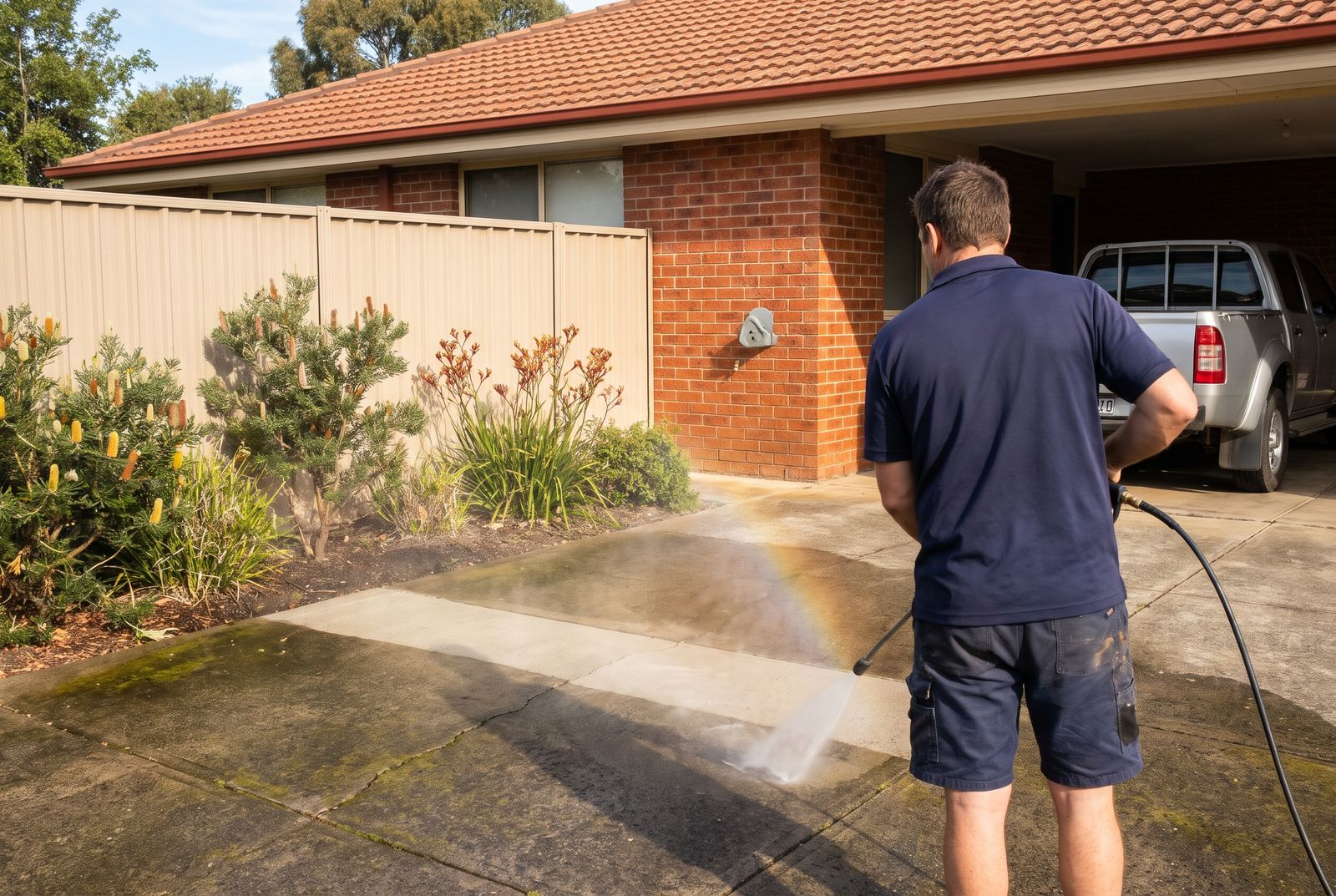
- Rinse it off at low pressureRinse with a garden hose, or a pressure washer on a low setting with a flat, wide spray moved along the grain. Work from one end across until all the cleaner is gone. Keep the nozzle back from the boards, as close up it can leave the timber furry. Re-scrub and rinse any patches that need more work.
- Let it dry, then oil the timberA washed deck takes a few hours to a full day to dry, depending on the weather. A clean strips away what is left of the old oil, so most timber decks are oiled after a wash: wait 24 to 72 hours, then allow 24 to 48 hours of dry weather after the oil goes on.
What you need to clean a deck
Have these ready before you clear the deck.
Broom and scrub brush
A broom to sweep off leaves and dirt, and a deck scrub brush or a broom to work the cleaner into the timber.
Deck cleaner and a bucket
A deck cleaner, mixed in a bucket as the label says, is made to lift dirt, stains and tannins and kill mould and mildew. For light dirt, warm soapy water is often enough.
Garden hose
To wet the deck before the cleaner goes on, so it does not dry too fast, and to rinse all the cleaner off afterwards.
Pressure washer, optional
Not essential. If you use one, keep it on a low setting with a flat, wide spray: a narrow jet tears soft timber and leaves it furry.
Covers for nearby plants
Plastic sheets to cover plants, metal and paintwork beside the deck that you are not cleaning, or wet garden beds down first.
Deck oil or sealer
For timber, once it is clean and dry. Stay with the type of coating already on the deck. Composite decks usually need none.
Treated pine decks: health and safety
Older treated pine decks may be CCA treated. These points come from government pages on handling treated timber, not on deck cleaning.
Is your deck CCA treated?
HealthyWA says copper chrome arsenate (CCA) treated wood was often used for decks, and unless your deck was built with hardwood or cedar, it is possible it was built with CCA treated wood. After a March 2005 safety review, it says, CCA should no longer be used for new domestic decking, but existing structures do not need replacing.
Gloves, masks and keeping children away
The NSW Environment Protection Authority says chemicals used to treat timber may leach onto the surface of the wood, so always wear gloves to avoid skin contact, and keep children and animals away from the work. To avoid breathing in sawdust, it says to wear a dust (P1) or dust and fume (P2 or N95) rated mask.
Cleaning different kinds of deck
What to change for your deck.
| Deck | What to change |
|---|---|
| Treated pine and other softwoods | Use the lowest pressure. Softwoods such as treated pine need the most care, as a narrow jet tears the soft grain. |
| Merbau | It bleeds a dark red-brown tannin when wet, most in its first year or two, which can stain concrete and pavers. Use a deck cleaner that removes tannin, and keep the runoff off light paving. |
| Composite | Use a cleaner made safe for composite and a lower pressure than timber, with no oil or sanding. The wrong pressure or products can void the warranty, so check the maker's care guide. |
Checked on 12 November 2026.
Where deck cleaning guides disagree
Guides split on these. Each side is given with its caution.
Chlorine bleach
One guide gives a chlorine bleach mix for mould, but warns it is harsh and not suitable for decks with certain finishes. Others say not to use it on timber or composite, as it strips the natural colour, and use oxygen bleach. On its mould removal page, the Better Health Channel says not to mix bleach with ammonia, acids or other cleaners, as this can release hazardous fumes.
How hard to scrub
Four guides call for stiff bristles or vigorous scrubbing. Two are gentler: one uses a soft-bristled brush or broom, and one warns that scrubbing too hard can scratch the surface.
Grey timber
Two guides point to cleaners made to treat grey, weathered timber. Others say grey timber is sun-damaged fibre, often about a millimetre deep, that washing alone will not remove, so most grey decks need sanding before oil for an even colour.
Wash water and water rules: check before you start
This applies whenever you hose or pressure wash a deck.
- Keep wash water out of the stormwater drain. If you use a high-pressure cleaner, send the waste water to a soakage area such as the garden or lawn.
- Water rules for outdoor cleaning differ by state, and in several by area, water supplier or town. Check yours before you start.
- Some rules apply every day. In Victoria, drinking water can only be used to clean a deck in set cases, such as removing staining once a season.
- In South Australia, a breach of the stormwater rule can bring a $300 fine.
When to call a professional
Call a professional if any of these apply.
- The deck stays grey, furry or peelingIf a clean leaves the timber grey or patchy, or the surface has gone furry, it usually needs sanding back before oil. Peeling paint or stain needs stripping, as a deck cleaner is not a paint remover. Both are separate jobs from a clean.
- Boards are soft, split or looseSoft boards, bounce in the deck and boards splitting lengthways are signs of rot or damage, and rotten or split boards need replacing. HealthyWA says to repair CCA treated structures with other treated wood, not CCA, or replace them.
- You are unsure of the pressure or productsIf you are unsure what pressure or products your deck can take, hire an expert. Damage from the wrong method may cost more to fix than a professional would have charged.
A professional typically rinses at low pressure with a wide fan tip, uses an oxalic acid cleaner on grey timber and tannin, and tells you if grey timber needs sanding. A timber deck clean is usually estimated at $120 to $600, and a clean and oil at about $18 to $45 a square metre. Home Ready Cleaning passes your job to one local cleaning business.
Full details: Pressure cleaning
More on pressure cleaning
More how-to guides
Pressure cleaning
Pressure cleaning in the most searched places
About Home Ready Cleaning
Official sources
Checked on 13 November 2026.
- HealthyWA, Stay safe around copper chrome arsenate treated wood
- NSW Environment Protection Authority, Working with and handling treated timber safely
- Better Health Channel, Mould removal at home
- Environment Protection Authority South Australia, Around the home (stormwater management)
- NSW Government, Water restrictions
- Seqwater, Water saving advice
- TasWater, Water restriction guidelines
- Power and Water Corporation, Katherine compulsory water conservation measures
- Victorian Government, Permanent water saving rules