

How-to guide
How to clean carpet without a shampooer
Clean carpet by hand with a vacuum, a mild dishwashing liquid mix, a brush and white towels. What matters most is keeping it damp, never soaked.
The short answer
Clear the room and vacuum it slowly, twice. Check the care label and test a weak mix of clear dishwashing liquid and warm water on a hidden spot. Then work one small section at a time: dampen it, never soak it, work the mix in gently and blot the dirt out with white towels. Blot again with plain water, then dry it with fans.
What you need
- Vacuum cleaner
- Clear, mild dishwashing liquid
- Carpet or scrubbing brush
- White towels or microfibre cloths
- Spray bottle or sponge
- Fans
How to clean carpet by hand, step by step
For one room of carpet.
- Clear the floor, then vacuum it twiceMove small furniture and clutter off the carpet, and cover the legs of heavy furniture that stays with plastic or aluminium foil. Then vacuum before any liquid goes on, or the dirt turns to mud. Make one slow pass, then a second across the first, with extra time on entrances and edges.
- Check the care label, then mix the solutionFind the maker's label on the carpet's edge or backing, or in your purchase papers, and follow it. Then gently stir a little clear dishwashing liquid into warm water so it does not foam. Extra soap is hard to rinse out and leaves a sticky residue.
- Test it on a hidden spotDab a little on a spot out of sight, blot it with a white cloth and let it dry fully. Stop if colour comes off on the cloth, or the spot fades, shrinks, changes texture or leaves a ring.
- Dampen one small section at a timeWork on about half to one square metre at a time. Mist the mix on, or wipe it on with a well wrung sponge or cloth, until the fibres feel damp, never soaked. Water that reaches the underlay dries slowly and can cause musty smells and mould.
- Work it in gently, then blotWork the mix into the pile gently with the brush, then press a dry white towel firmly onto the patch and lift, without rubbing. Turn to a clean side and press again, swapping towels as they get wet or dirty, until little dirt comes up.
- Rinse by blotting with plain waterBlot the patch with a cloth dampened in plain water to lift out the leftover soap, until it no longer feels sticky or soapy. Soap left in the pile attracts new dirt. Then press a dry towel on it again, firmly.
- Dry it fully before you use the roomPoint a fan at each section as you finish it, and open the windows on a dry day. Drying commonly takes several hours. Stay off the carpet until it no longer feels cool or damp, and put furniture back only when it is dry underneath.
What you need to clean carpet by hand
Gather these before you start.
Vacuum cleaner
Any vacuum will do. Without one, sweep the dirt to one edge with a stiff brush or carpet broom and collect it with a dustpan. It lifts less, but beats wetting loose dirt.
Clear, mild dishwashing liquid
Only a little is needed. A mild carpet cleaning solution, used as its label directs, also works. For wool, use a pH-neutral wool detergent.
Carpet or scrubbing brush
To work the mix gently into the pile. On wool and delicate fibres, blot with a towel instead of brushing.
White towels or microfibre cloths
Plenty, so you can keep turning to a clean side. White shows when dirt or dye comes up, and coloured towels can transfer dye to the carpet.
Spray bottle or sponge
A spray bottle mists the mix on lightly. A well wrung sponge or cloth, with a bowl for the mix, works too.
Fans
To point at each damp section as you finish it. An air conditioner or dehumidifier helps if the room is humid.
Health and safety advice from government pages
From Australian government health pages.
Read the label and air the room
The Victorian Department of Health's Better Health Channel says to read a product's label before use and follow the instructions, have the recommended protective equipment, such as gloves, safety goggles and a face mask, and work in a well ventilated area. It says to clearly label any product you repackage.
Do not mix cleaning products
On its page about mould at home, the Australian Centre for Disease Control says not to mix cleaning products, as they can create toxic fumes. The Better Health Channel says chemicals may create a poisonous gas or liquid when mixed.
If you are allergic to dust mites
The Better Health Channel says vacuuming makes house dust mite allergens airborne for up to 20 minutes, so if you are allergic to dust mites, wear a mask or ask someone else to vacuum. It says you may air the house for an hour or so afterwards.
Cleaning carpet without water
For carpet that should not get too wet, or to freshen it between washes.
A dry powder clean
Sprinkle a dry carpet cleaning powder evenly over vacuumed carpet, following its label. Brush it into the fibres, leave it as long as the label says, then vacuum it all up. It can lift dirt and smells without much moisture, but it does not rinse as deep as a wet clean.
Baking soda to freshen it
Sprinkle bicarbonate of soda (baking soda) on dry carpet, leave it from 15 minutes to overnight, longer for strong smells, then vacuum it all up. The Western Metropolitan Regional Council in WA gives the same tip.
Wool, synthetic and natural fibre carpet
What the carpet is made of changes the method.
| Carpet | What changes |
|---|---|
| Nylon, polyester or polypropylene | The steps above suit most synthetic carpet, after a patch test. |
| Wool or wool blend | Use a wool-safe detergent, keep moisture low and blot rather than scrub. Too much water can shrink wool or make its colour bleed. |
| Jute, sisal, seagrass and other natural fibres | Check the maker's care guide, as natural fibres need the right products. Some guides suggest not wet cleaning them at home, as moisture can cause swelling, staining or mildew. |
Checked on 12 November 2026.
Where the guides disagree
Guides give different advice on these, and the wrong choice could harm the carpet.
Hot, warm or lukewarm water
Most guides use warm or lukewarm water, and one uses hot, not boiling. Some warn that hot water can affect dyes, set certain stains and damage some natural fibres, and say to follow the carpet maker's instructions.
Stiff or soft brush
Some guides use a stiff nylon brush and scrub in small circles. Others use a soft brush, follow the direction of the pile and avoid hard circular scrubbing, which can damage the carpet's texture.
White vinegar
Some add white vinegar to the mix, from a teaspoon in 500 mL of water to half a cup in a litre, or spray on equal parts vinegar and water. One adds it only if the care instructions allow. Wool is more sensitive, and strong acids can affect its dyes.
When to call a professional
Hand cleaning suits light dirt and upkeep, so call a professional if any of these apply.
- Deep stains, strong smells or heavy wearDeep, set-in stains, persistent odours and heavy wear are signs it is time. So is old pet urine that has soaked through, which hand cleaning cannot reliably reach.
- It stays damp or smells mustyAn over-wet patch can take a day or more to dry, as moisture sits in the backing. If it smells damp, feels wet underneath or stays damp far longer than expected, it may need professional drying.
- There is mould or water damageNSW Health says carpet contaminated with mould may need professional cleaning or replacing, and water-damaged carpet should be completely cleaned and dried, or discarded. The Australian Centre for Disease Control says to have contaminated carpets professionally cleaned, or replace them.
- You are moving out of a rentalSome leases name a steam clean, so read yours, but whether one can be required depends on your state or territory. In NSW, Queensland and South Australia it turns on a pet kept inside, and in Western Australia on a pet the landlord agreed to. In Queensland, Tasmania, the ACT and Victoria (for agreements from 29 March 2021) it can turn on how the carpets were cleaned at the start. In the Northern Territory, the condition reports decide.
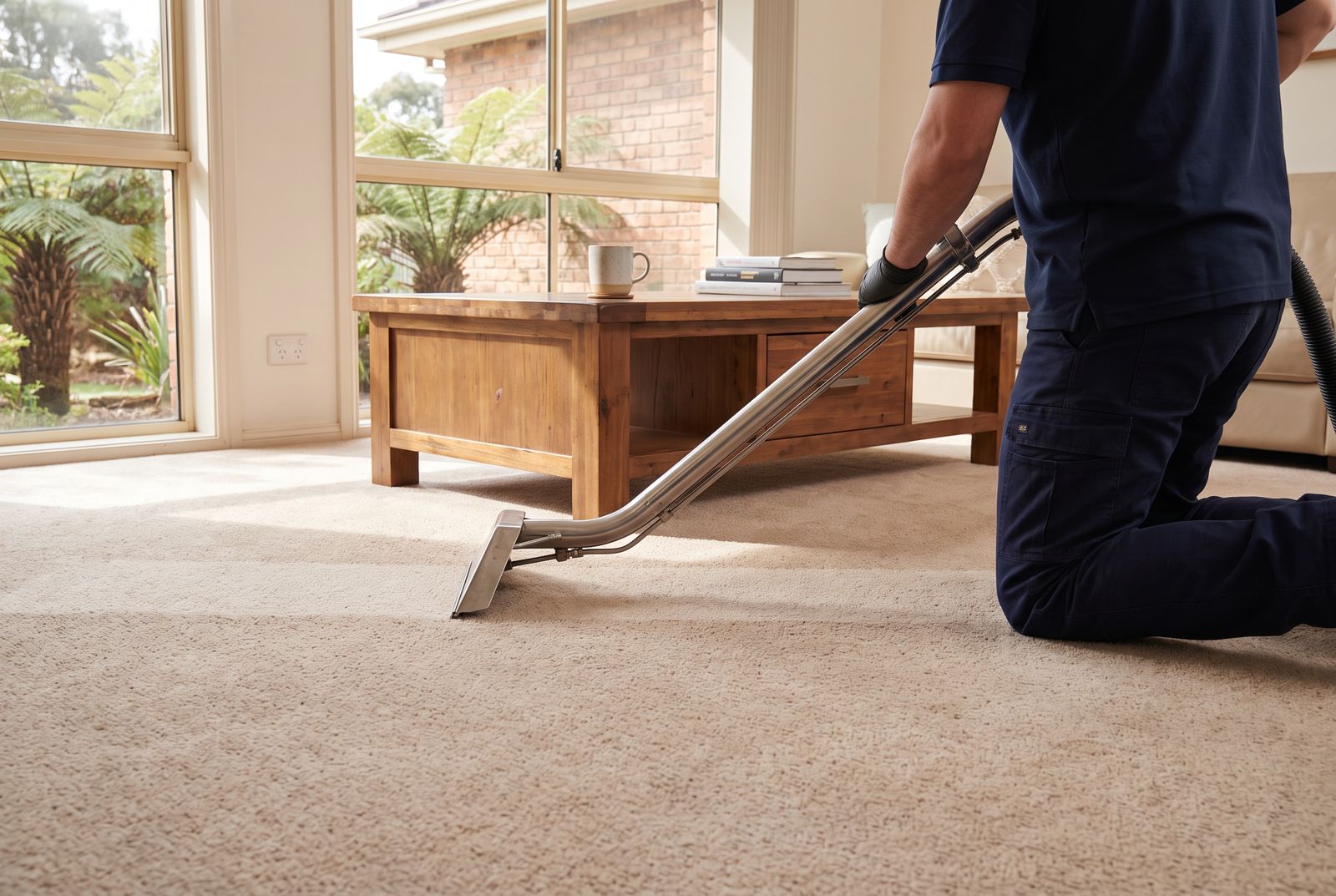
A professional's hot water extraction flushes solution into the pile and pulls the dirt, residue and moisture back out, which towels cannot do. As an estimate, a steam clean typically costs $90 to $240 for one or two rooms and $110 to $360 for three. Home Ready Cleaning passes your job to one insured local cleaning business.
Full details: Carpet cleaning
More on carpet cleaning
More how-to guides
Carpet cleaning in the most searched places
About Home Ready Cleaning
Official sources
Checked on 13 November 2026.
- Better Health Channel, Chemicals in the home
- Australian Centre for Disease Control, Preventing mould exposure
- Better Health Channel, House dust mite
- Western Metropolitan Regional Council, Waste Avoidance Tips: How to Green Clean
- NSW Health, Mould
- NSW Fair Trading, Residential tenancy agreements
- Consumer Affairs Victoria, Condition reports
- Residential Tenancies Authority, Carpet cleaning and pest control
- Consumer and Business Services, Rental agreement terms inconsistent with the Residential Tenancies Act 1995
- Consumer Protection (LGIRS), Renting with pets
- Consumer Affairs Tasmania, Evidence to support a rental bond claim
- ACT Government, The Renting Book January 2026
- Northern Territory Consumer Affairs, A guide to renting in the NT