

How-to guide
How to dry carpet quickly
Get the water out of wet or flooded carpet, lift it to reach the underlay and keep air moving until it is dry underneath. The one thing that matters most is to start straight away.
The short answer
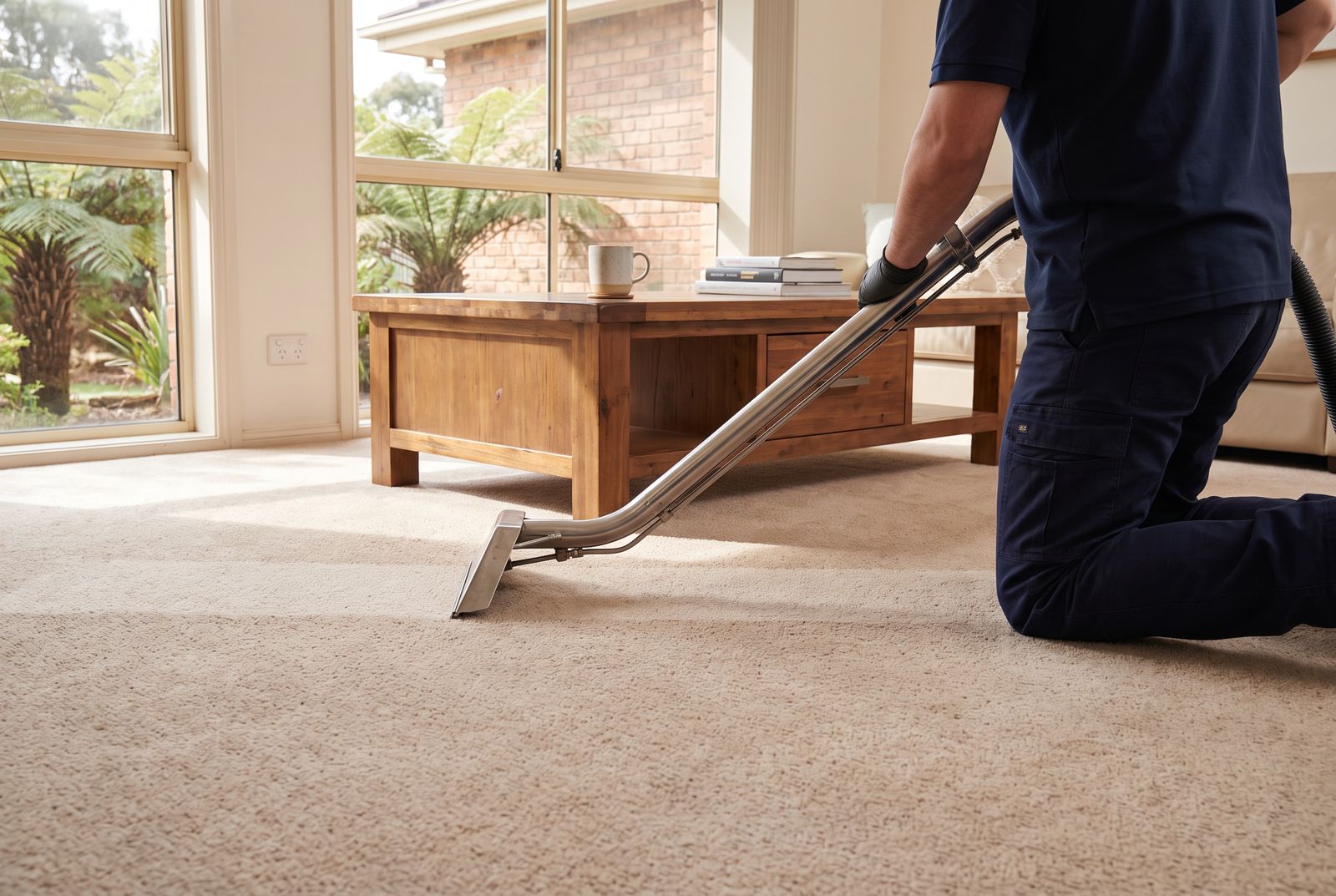
Stop the water at its source. Pull the water out with a wet/dry vacuum in slow passes, never an ordinary vacuum, then press dry towels into the carpet without rubbing. Lift a corner to check the underlay and let air under. Run fans and a dehumidifier, open doors and windows on dry days, and keep going until it is dry underneath, not just on top.
What you need
- Wet/dry vacuum
- Dry towels
- Fans or air movers
- Dehumidifier
- Buckets or a pump
- Boots, gloves, eye protection
How to get water out of carpet and dry it
Start as soon as you find the water.
- Stop the water and clear the areaStop the source first: turn off the water to a burst pipe, get a leak repaired, or close the window letting rain in. Move furniture off the wet carpet. After a flood, HealthyWA says not to switch on electrical or gas equipment until a licensed electrician or gas fitter has checked it.
- Get the standing water outIf water is pooling, clear the worst with buckets or a pump. Then go over the carpet slowly with a wet/dry vacuum, pass after pass, until it is damp rather than soaking.
- Press out the rest with towelsLay dry towels over the wet patch and press down firmly. Do not rub: it spreads the water and can damage the pile. Swap in fresh towels as they get wet, then run the wet/dry vacuum over it again.
- Lift a corner and check the underlayCarefully pull a corner or edge of the carpet away from the wall and feel the underlay, which holds more water than carpet and dries slowly. Prop the edge up so air reaches both sides.
- Get air moving and the damp outPoint fans across the wet carpet and under the lifted edge. Run a dehumidifier close to the wet area, emptying its tank regularly, and open doors and windows on dry days. Keep them going until the carpet is dry.
- Check it is dry underneathA dry surface does not mean the underlay is dry. Press a dry cloth or paper towel firmly into the carpet in several places. If it picks up moisture, feels cooler or smells musty, keep drying. Aim for dry within 48 hours, the time government health pages give for preventing mould.
- Lay it back and clean itMake sure the floor underneath is dry before you lay the carpet back. Once everything is fully dry, vacuum and clean the area without soaking it again. Cleaning too soon can seal the damp in.
What you need to dry wet carpet
Gather these before you start.
Wet/dry vacuum
One made to extract water from carpet. Never use an ordinary household vacuum on wet carpet: it is not built for moisture and can be damaged.
Dry towels
Plenty of clean, dry towels to press into the carpet and soak up what the vacuum leaves. Swap in fresh ones as they get wet.
Fans or air movers
Floor fans to move air across the carpet and under the lifted edge. Air movers are more powerful, and can be hired with dehumidifiers.
Dehumidifier
Takes moisture out of the air so the carpet dries faster. Put it close to the wet area and empty its tank regularly.
Buckets or a pump
For standing water, such as after a flood, buckets, a mop or a pump to clear the worst before the vacuum goes on.
Boots, gloves, eye protection
For floodwater, NSW Health advises boots, gloves and eye protection while you clean up, and washing your hands thoroughly afterwards.
Staying safe when carpet has flooded
From government health pages on floods and mould.
Floodwater can make you sick
HealthyWA says water, mud and silt can contain bacteria and viruses that can make you or your family sick. It says not to expose broken skin or cuts to dirty water, mud or silt, to assume anything touched by wastewater is contaminated, and to keep children and pets away until the building is cleaned and made safe.
No petrol or diesel pumps indoors
NSW Health's household clean-up page for after a flood or storm says never to use petrol or diesel-powered equipment, such as generators and pumps, in enclosed spaces. HealthyWA says fumes from such equipment can be a health hazard.
Heating, cooling and who should not clean mould
SA Health, on controlling mould after a flood, says air-conditioning or central heating should not be used if damaged or contaminated by floodwater, and people with immunocompromise or respiratory disease should not clean up mould.
Clean water, grey water and floodwater
Where the water came from decides whether you can dry it yourself.
| Water or carpet | What it means |
|---|---|
| Clean tap water, such as from a leaking tap or overflowing bath | Usually fine to dry yourself with the steps above, if you start fast. |
| Grey water, such as from a washing machine | Often a job for a professional. Some guides suggest you can dry it yourself if you clean and disinfect the carpet and underlay thoroughly once the water is out, and expect slower drying. |
| Floodwater or sewage | A job for a professional, and the carpet and underlay are often replaced. Where possible, take wet floor coverings out and clean and dry the floor before anything new is laid. Ask your insurer before you clean or throw anything out, and take photos. |
Checked on 12 November 2026.
Where the guides disagree
Guides give opposite advice on these, and the wrong choice could harm the carpet.
Baking soda on damp carpet
Two guides sprinkle baking soda on a small damp patch for a few hours to draw out moisture, then vacuum once the surface is dry. Two say not to put powder on damp carpet: it can leave residue in the fibres, does not remove trapped water and can make things worse.
Heat and hair dryers
Heating the room can help, and the Northern Territory Government lists heaters with fans and dehumidifiers for drying a house out. Too much heat damages fibres, though. Some guides rule out a hair dryer. Others allow one on a very small damp spot, kept moving, and warn that direct heat can melt or distort synthetic fibres.
Steam cleaning wet carpet
Two guides say not to steam clean carpet that is already wet, as it adds moisture and can push it further down. Two others, both from businesses that sell the service, say a professional hot water extraction pulls water out as it cleans.
When to call a professional
Call a professional if any of these apply.
- The water was not clean tap waterFloodwater, sewage and water from a washing machine or toilet are a job for a professional, who can remove and dispose of the carpet and underlay if they cannot be saved.
- It is pooling or covers a large areaStanding water, or a large or widespread wet area, needs a professional. After a flood, the Victorian Department of Health and Human Services says to consider professional cleaners if the affected area is large.
- It is still damp after 24 hoursIf the carpet still feels damp after 24 hours, or the water sat for more than 24 hours before you found it, call a professional. They can use moisture testing equipment to find water still trapped below.
- The underlay is soaked throughUnderlay holds more water than carpet and is very hard to dry fully in place. It may need lifting out and drying separately, or replacing, and a professional can tell you which.
- You can see or smell mouldDark or green spots, grey or white patches at the edge, or a smell that turns from damp to musty are signs of mould. NSW Health says carpet with mould may need professional cleaning or replacing.
A professional brings industrial vacuums, high-powered air movers and large dehumidifiers. Water damage drying is usually quoted as its own job, separate from a carpet clean. Once the carpet is dry, a steam clean of one or two rooms is typically estimated at $90 to $240. Home Ready Cleaning passes your job to one insured local cleaning business.
Full details: Carpet cleaning
More on carpet cleaning
More how-to guides
Carpet cleaning in the most searched places
About Home Ready Cleaning
Official sources
Checked on 13 November 2026.
- NSW Health, Household clean-up for after a flood or storm
- HealthyWA, Recovering after the flood - clean-up for householders
- South Eastern Sydney Local Health District (NSW Health), Mould
- Victorian Department of Health and Human Services, After a flood: mould and your health
- SA Health, Controlling mould after a flood
- Northern Territory Government, Mould growth and your health
- NSW Health, Mould fact sheet