

High pressure cleaning
Need a pressure cleaner? Hear back within the hour.
Concrete driveways, paths, pavers and patios. Tell us what needs cleaning and one verified local pressure cleaner gets in touch.
- Licence checked and insured
- Verified by Home Ready Cleaning
- Matched with a pressure cleaning specialist
From 500+ reviews
Checked before they get your job
- Back within the hourA local pressure cleaner gets back to you within the hour.
- Licence checkedWe check each business's licence before it gets jobs.
- InsuredEvery business we pass jobs to is insured.
- Verified by Home Ready CleaningLook for the badge. Only verified businesses get your job.
What a pressure clean typically covers
Every cleaner works their own way, so confirm the steps when they call. These are the jobs most cleaners list for each part of the outside of a home.
Driveways and paths
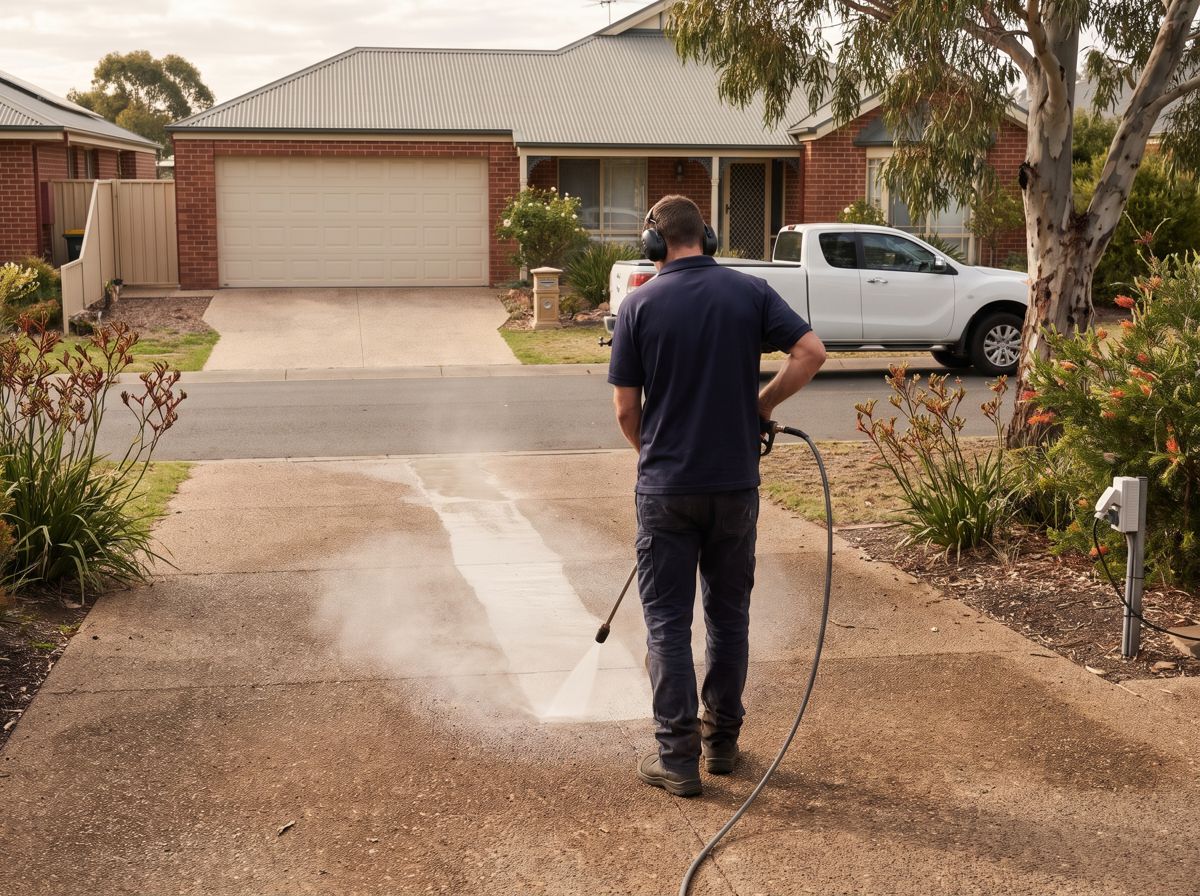
- Dirt, grime, moss and algae washed off
- Pressure set to suit concrete, pavers or aggregate
- A spinning surface cleaner on flat concrete
- Stains checked, with a heads-up on any that may stay
- Garden edges rinsed and a final rinse of the area
Patios, decks and pool areas
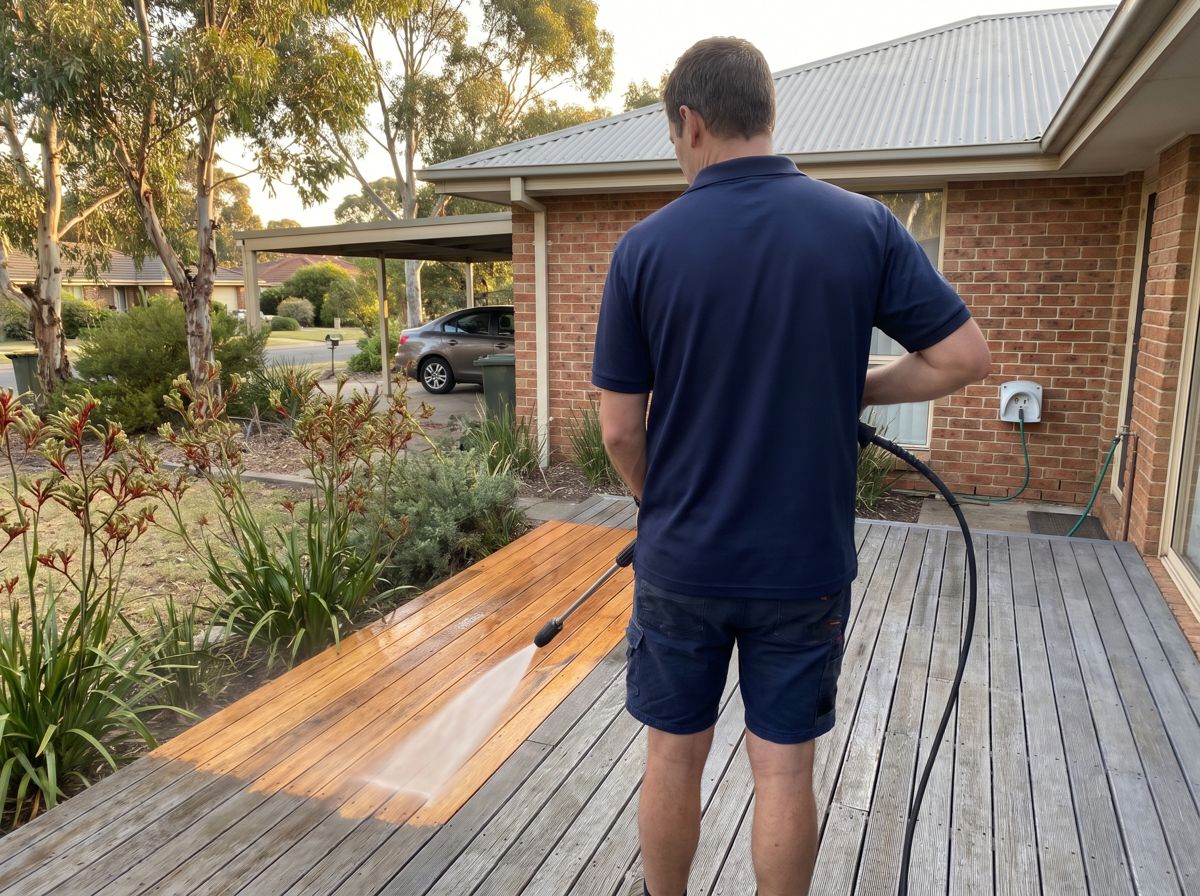
- Mould and algae treated, then washed off
- Lower pressure on grout and paver joints
- Wash water kept out of the pool
- Timber decks done at low pressure, along the grain
- Decks left clean and ready for oiling
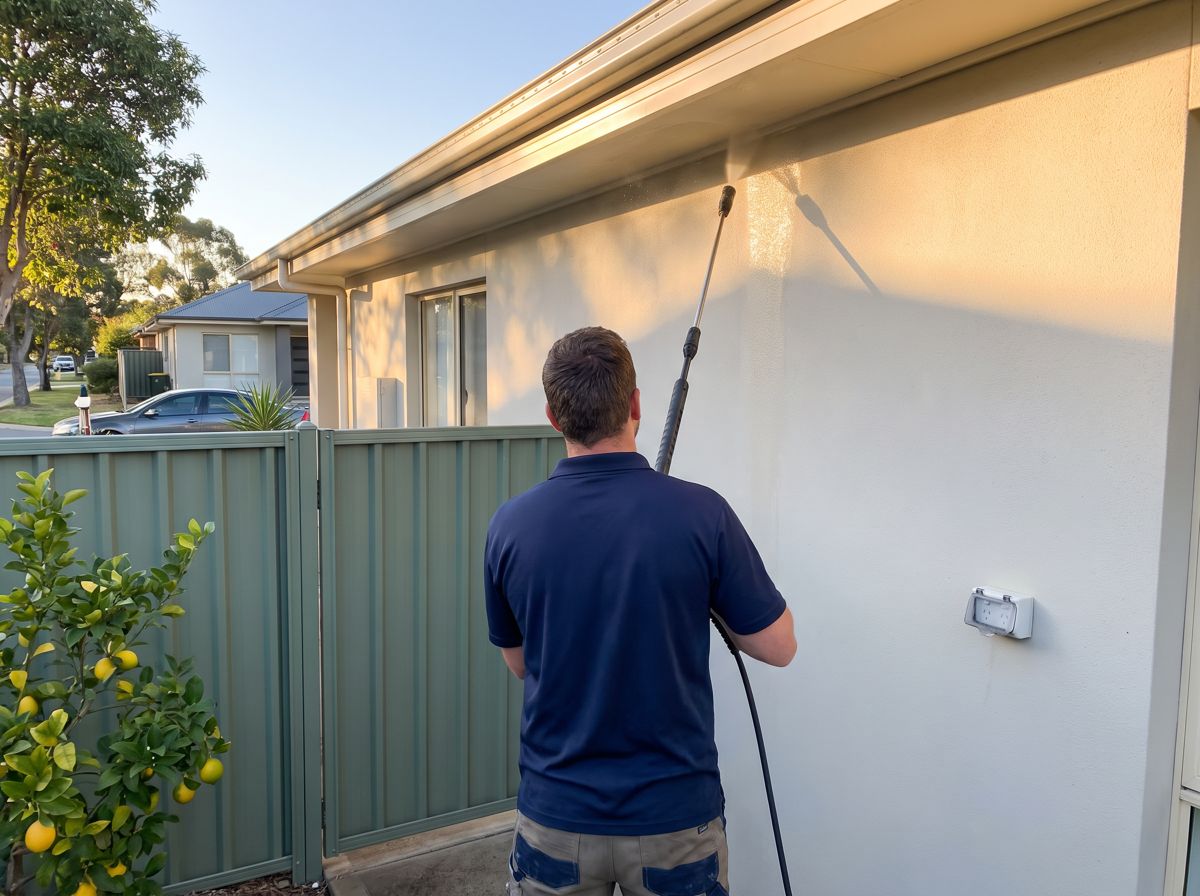
House walls
- Plants and power points protected first
- Walls soft washed at low pressure
- A solution that kills mould and algae
- Washed from the top down, then rinsed
- Eaves and fascia done with the walls
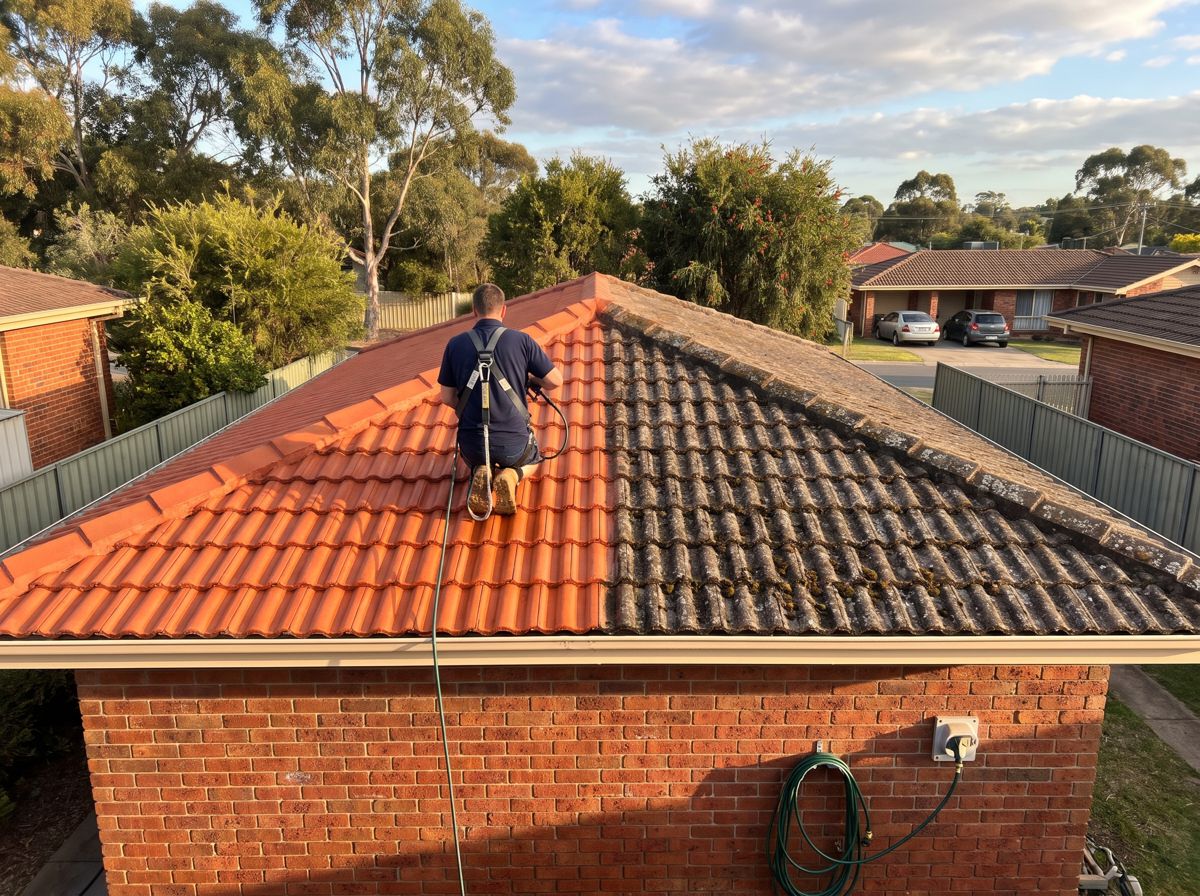
Roofs
- A check of the roof material and condition
- Moss, lichen and grime treated and rinsed off
- Pressure or soft wash to suit the roof
- Done before the walls and paths below it
Sometimes included
On some cleaners' lists and not others. Ask when you book.
- Hot water for oil and grease
- Exterior window frames
- Gutter faces and downpipes
- Cobwebs brushed off the eaves
- A gutter flush after a roof clean
Popular add-ons
Typical price range for each.
- Oil stain treatment$30 to $300
- Treatment to slow regrowth$50 to $400
- Sealing, per square metre$5 to $45
- Gutter clean, with a roof clean$100 to $450
- Outside windows, with a house wash$80 to $250
- Fence, per metre of one side$4 to $21
Not part of a pressure clean
These are separate jobs, or are left out of a standard clean.
- Asbestos cement or fibro roofs, walls and fences
- Oiling or staining a timber deck
- Re-sanding paver joints
- Fixing cracked concrete, render or tiles
- Graffiti and chewing gum removal
What high pressure cleaning means, and who it suits
What the words cover and who books it.
A name for the job, and a method for hard ground
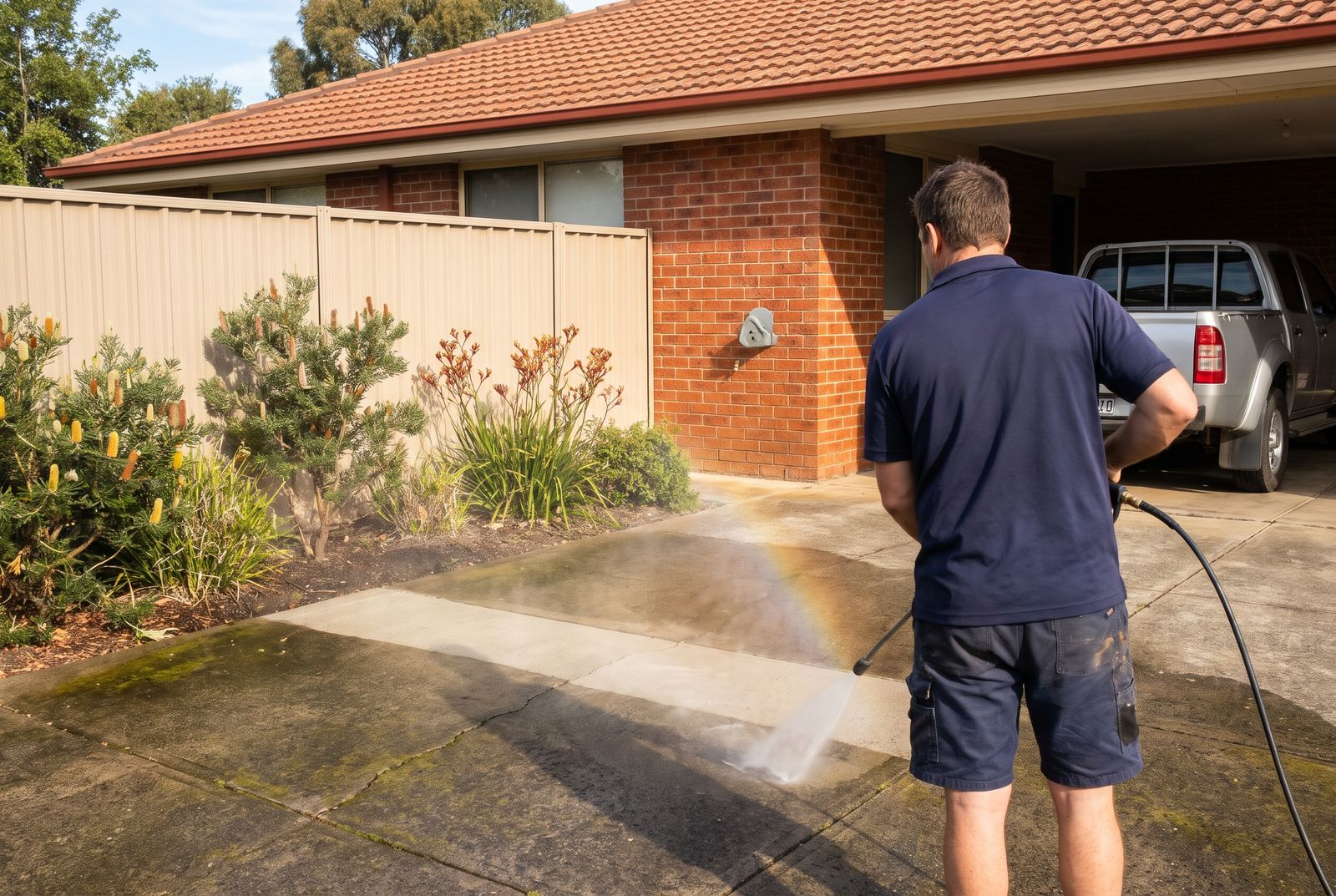
High pressure cleaning is another name for pressure cleaning, and many cleaners use it for their whole outdoor service, soft washing included. As a method it is narrower: water at high pressure on hard ground such as concrete driveways, paths and pavers. Painted walls, render and roofs are usually soft washed at low pressure instead.
Who usually books it
People often book it before a sale, a property inspection or an event. Others book to clear moss, algae and mould, which can make paths and pool edges slippery when wet. Many cleaners also clean strata and body corporate common areas, as well as homes.
What a visit usually covers, and leaves out
Under this name, most cleaners cover hard ground such as driveways, paths, paving, patios and pool surrounds. Many also take on oil, tyre marks and mould, though oil and heavy growth usually need a treatment and extra time. Some also clean brickwork or wash house walls. Roof cleaning is often a separate service, so if you want the roof or walls done too, say so when you book.
Estimated pressure cleaning prices
Pressure cleaning is usually priced by the job or by the square metre, so the surface and its size set most of the cost. These are estimates of what to expect. Every business sets its own price.
| Surface | Usual time | Estimated price |
|---|---|---|
| Single driveway | 1 to 2 hours | $100 to $400 |
| Double driveway | 1 to 3 hours | $150 to $650 |
| Path, patio or pool surround | 1 to 4 hours | $100 to $700 |
| Timber deck | 1 to 2 hours | $150 to $600 |
| House wash, one storey | About half a day | $250 to $900 |
| Roof, one storey | 3 to 6 hours | $300 to $1,900 |
Estimates only, for one storey with easy access and normal dirt and growth. A single driveway is about 30 to 40 square metres and a double about 55 to 70. Oil stains, sealing, a second storey and steep or hard-to-reach areas add to it. Every business sets its own price. Estimates checked on 12 November 2026.
What moves the price
- Size
- Flat areas are often priced by the square metre, at about $2 to $12 on concrete and pavers, so a bigger area costs more.
- Minimum charge
- Most cleaners have a minimum charge of about $100 to $275, so a small path on its own costs more per square metre.
- Surface
- Plain concrete is quickest. Pavers, exposed aggregate, timber and painted walls need lower pressure and more care, so they usually cost more.
- Stains and growth
- Oil, rust, heavy mould and lichen need a treatment and extra time. Old oil stains often fade rather than disappear.
- Storeys and access
- A second storey, a steep block or tight side access adds time. A two-storey house wash usually costs about $400 to $1,400.
- One visit or several
- Doing the driveway, paths and patio in one visit usually costs less than separate bookings, as set-up and travel are paid once.
How high pressure cleaning works
What cleaners usually change from one surface to the next.
Pressure, nozzle, distance and water temperature
Most cleaners set the pressure to suit the surface, and some also set the nozzle, the distance from the surface and the water temperature. On pavers, exposed aggregate and brick, the pressure is usually turned down to protect the joints, the mortar, the stones and any worn areas.
Checking the surface first
Some cleaners look over the surface before they start, for its age, wear, cracks, joints, edges and drainage, as older or worn surfaces may need a more careful approach than durable ones. Tell the cleaner about loose pavers, cracks, damaged surfaces or drainage problems when you book.
One home, two methods
On a home with a concrete driveway and rendered or painted walls, cleaners usually choose the method area by area: high pressure on the ground, a soft wash on the walls. Some still list rendered walls under high pressure cleaning, so ask which method each surface will get.
When another job is the right one
When the job is not hard ground outside.
It is the glass that is dirty
If it is the glass that is dirty, book a window clean. Each outside pane is usually scrubbed, then squeegeed or rinsed, and most window cleaners reach upper storeys from the ground with a water-fed pole. Outside only costs less than inside and out, and you do not always need to be home.
Window cleaningThe inside of the home needs a reset
For the inside of the home, the job is a deep clean. It usually covers the kitchen, bathrooms, laundry and every room, plus the skirting boards, door frames, window tracks, fans and dust a regular clean skips. Gutters, roofs, lawns and pressure washing are left out of it, so book the outside on its own.
Deep cleaningThe tiles or stone are inside
Tiled floors inside the home are a tile and grout clean. A cleaning product is usually left to soak into the grout, which is scrubbed by brush or machine, then rinsed with hot water and the dirty water vacuumed up. Acids can etch marble, travertine and limestone, so say if your floor is stone.
Tile and grout cleaningWater rules and wash water: check before you book
Each state and territory has its own rules, and in some they differ by area, water supplier or town.
- Some rules limit using water to clean driveways and paths. Check the rule where you live before you book.
- Ask the cleaner how they keep the wash water out of the street drain, and whether that is in the quote.
- In the ACT, ask if the cleaner uses a high-pressure low-volume cleaner, which can be used at any time.
What to ask before you book high pressure cleaning
Every business works its own way, so ask how your job will be done.
- Will you pre-treat the stains first, and with what?Many cleaners put a degreaser or mould treatment on first, and some only when water alone will not lift a stain. Ask what will go on near your garden or pool.
- Do you use hot water on oil and grease?Many cleaners use hot water where there is oil or grease, but it is on some cleaners' lists and not others. Ask before you compare prices.
- What will you cover or protect near the work?Spray, loosened dirt and cleaning products can reach doors, windows, plants and cars. Careful cleaners cover gardens and fittings, and some agree on any problem areas with you first.
- How will you keep the wash water out of the street drain?Some cleaners vacuum up the wash water and take it away, or block it off. That can add to the price, so ask whether it is in the quote.
- Do you seal after the clean, and what does it add?Many cleaners offer a sealer as the next step after a high pressure clean. Sealing slows stains and regrowth, and usually adds about $5 to $45 a square metre.
- What happens if an area is missed?Some cleaners come back to re-clean a missed area that was in the agreed job. Ask whether they do, and how soon you need to tell them.
High pressure cleaning: your questions answered
How much does high pressure cleaning cost?
As an estimate, a single driveway runs $100 to $400, a double driveway $150 to $650 and a path, patio or pool surround $100 to $700. Oil stains, sealing, a second storey and steep or hard-to-reach areas add to it, and every business sets its own price.Can high pressure cleaning damage concrete or pavers?
It can, if it is done the wrong way. Too much pressure can etch concrete, leave stripes, loosen exposed aggregate and wash the sand out of paver joints. Most cleaners use a spinning surface cleaner on flat concrete for an even finish. Ask how each part will be done.Will high pressure cleaning get oil stains out?
Often, but full removal cannot be promised. Oil and grease are usually pre-treated with a degreaser, and many cleaners then use hot water. Old oil, rust and other stains soaked deep into concrete may fade rather than disappear completely. The treatment usually adds about $30 to $300, so ask what result to expect.Can house walls or a roof be high pressure cleaned?
Usually they are soft washed instead. A solution that kills mould, algae and lichen goes on at low pressure, is left to work, then is rinsed off. High pressure can strip paint, chip render and force water behind cladding, and too much pressure can crack terracotta and strip worn concrete roof tiles.How often should a driveway be high pressure cleaned?
Every one to three years suits most driveways and paths. Shaded or damp areas that grow mould, and pool surrounds, can need it every year. There is no single schedule for every property, so book when the build-up starts to affect how it looks or its grip underfoot.Can a fibro fence or roof be high pressure cleaned?
Not if it contains asbestos. The Asbestos and Silica Safety and Eradication Agency says it is illegal in every state of Australia to use high pressure water spray or compressed air on asbestos materials. If you are not sure whether a fence or roof contains asbestos, check the agency's page and say so when you book.High pressure cleaning by city and town
Pick your city or town to send the job to a local pressure cleaner there.
Pressure cleaning in the most searched places
- Pressure cleaning in Brisbane
- Pressure cleaning in Perth
- Pressure cleaning in Sydney
- Pressure cleaning Gold Coast
- Pressure cleaning Sunshine Coast
- Pressure cleaning in Melbourne
- Pressure cleaning in Adelaide
- Pressure cleaning Central Coast
- Pressure cleaning in Cairns
- Pressure cleaning in Geelong
- Pressure cleaning in Mackay
- Pressure cleaning in Townsville
More on pressure cleaning
Pressure cleaning guides
Official sources
Checked on 12 November 2026.
- Victorian Government, Permanent water saving rules
- Seqwater, Water saving advice
- Power and Water Corporation, Katherine compulsory water conservation measures
- Icon Water, Permanent Water Conservation Measures, Rules for Residents
- Asbestos and Silica Safety and Eradication Agency, The dangers of asbestos cement roofs
Ready when you are.
Tell us the job once. One verified local pressure cleaner gets back to you within the hour.
Get it pressure cleaned →